



Bible, History, Archaeology
History,
Archaeology
Did Jesus really exist?
Extra-biblical sources bear witness to it
Contents:
Introduction - Jewish sources - Flavius Josephus - Fishing scene - The Babylonian Talmud - Roman sources - Tacitus - Pliny the Younger - Suetonius - Adrien's Letters - Greek sources - Phlegon of Tralles - Galen - Lucian of Samosata - Other sources - Mara, son of Serapion - The Quran -
With the kind permission of Alexandre Nalot of Bibliorama
What evidence could we provide for the existence of the historical Jesus to those who doubt it?
The theologian Daniel Marguerat states that «Jesus is the ancient figure on whom we are best documented, both quantitatively and qualitatively.
Introduction
With the exception of the holy books that make up The New Testament, would we have, through other sources, proof that Jesus really existed? We know that such a man could not have been a simple ordinary person who lived at the beginning of the Christian era. The very fact of using «Christian era» leads us to consider that already Jesus of Nazareth marked our calendar. This article seeks to list external sources from historians, political figures, and other authors from the 1st to the 7th centuries.
1. Jewish sources
 Flavius Josephus
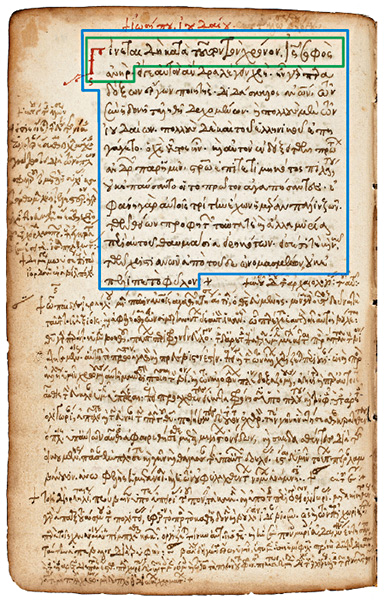
The Jewish writer Flavius Josephus (verses 37-100) wrote a history of his people, a masterful work composed of 20 books. Its title: The Jewish Antiques, retrace the history of the Hebrews from their origins, starting with the creation of Adam up to the twelfth year of Nero's reign. The rest of the history is told in another work by Flavius Josephus: The Jewish War against the Romans. This work, the second, is a seven-book narrative that covers the period from the intervention of the Seleucid king Antiochus IV (or Antiochus Epiphanes (who opposed the Maccabean revolt) in Judea, which took place in 175 BC, until The Fall of Masada in 74 AD.
Image opposite: Codex Parisinus Graecus 2075, 45v.
This 16th-century manuscript contains the Testimonium Flavianum portion of Josephus that refers to Jesus (highlighted in blue). The first sentence of the manuscript, highlighted in green, reads, in Greek: «To Jesus lived in that era, a wise man, if one can even call him a man. ». Most scholars believe that this passage of the Testimonium is drawn from Josephus's original writings, but that it may contain later additions. © National Library of France.
In the Jewish Antiques, In a brief passage, Flavius Josephus mentions the person of Jesus at the end of the first century CE. This passage is commonly called the Testimonium flavianum (Testimony of Flavius).
Here is the translation of the Greek text as it can be read today in the manuscripts of Jewish Antiques :
«At this time appeared Jesus, a wise man, if indeed it is permissible to call him a man, for he accomplished surprising deeds and was a teacher to such men as readily embrace the truth. He won over to himself many Jews and Greeks. He was the Christ. And when Pilate, because of an accusation made by the principal men among us, had condemned him to the cross, those who had loved him from the first did not cease. For he appeared to them again after three days, the divine prophets having foretold these and a thousand other wondrous things concerning him. And the tribe of Christians, so named from him, has not yet disappeared.
Flavius Josephus, Jewish antiques, XVIII, 63–64

Illustration depicting a fishing scene with three of Jesus of Nazareth's future disciples on the Sea of Galilee. © AI/Théo Truschel.
The Babylonian Talmud
As surprising as it may seem, one finds in the Babylonian Talmud (around the 6th century), a passage again evoking Jesus. The Babylonian Talmud comprises 6 orders or books. The 4th, called Nezikin (Damages) contains 10 treatises, and the fourth is titled Sanhedrin. It is particularly concerned with criminal and penal law. And it is in this treatise that we find this passage:
«Tradition reports: On the eve of Passover, Yeshu was hanged. A herald walked before him for forty days, saying: He is to be stoned because he practiced magic, deceived, and led Israel astray. Let anyone who knows how to defend him come and testify in his favor. But no one was found who testified in his favor, and therefore he was hanged on the eve of Passover. Ulla said: Do you believe that Yeshu (in later editions – Yeshu Hanotsri) was one of those for whom one seeks what might excuse them? He was a seducer! And the Torah says: You shall not spare him, nor shall you conceal him (Deuteronomy 13:9)... Tradition reports: Yeshu had five disciples: Mattai, Naqi, Netser, Boni, and Todah.
Treaty of Babylon 43a
This is not about whether the truth has been bent, but simply about noting the historical fact of the figure Yeshua.
Roman Sources
Tacitus
In the Annals From the Roman historian Tacitus, written around 116 AD, there is a passage recounting the accusation of Christians during the Great Fire of Rome in 64 AD. The fire was likely orchestrated by Nero himself, but he condemned the Christians, making them scapegoats.
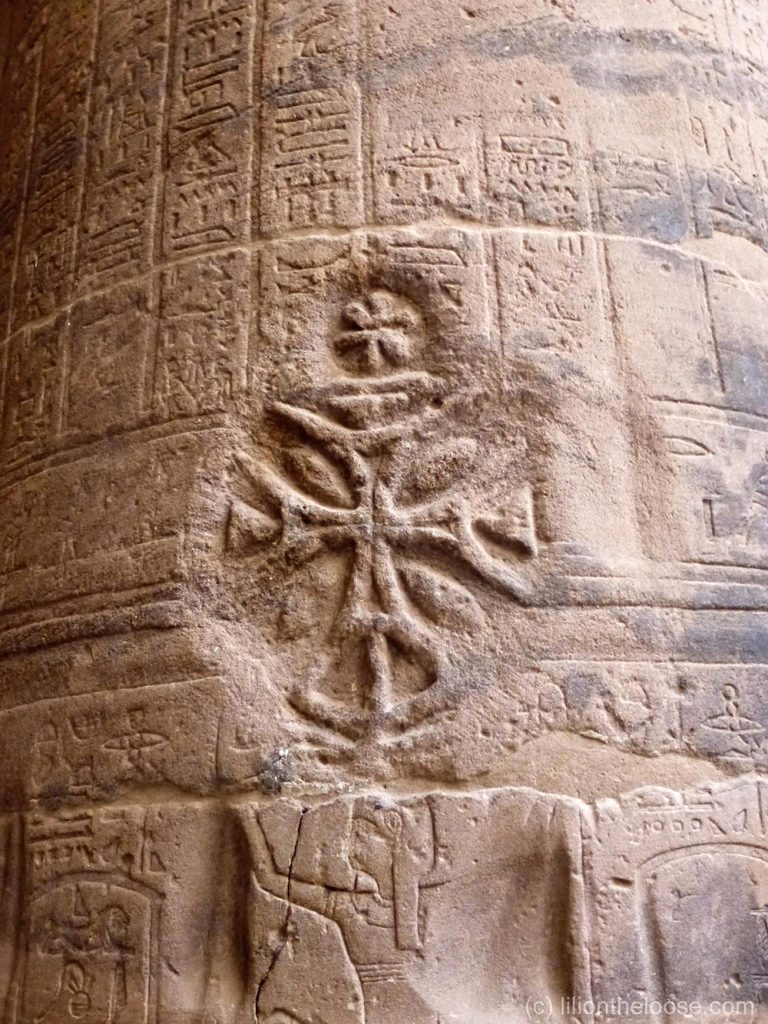 Image on the right: a Coptic Christian cross carved on a column of the Temple of Philae in Egypt. Public domain.
«But no human means, nor imperial largesses, nor expiatory ceremonies could silence the public outcry accusing Nero of ordering the fire. To appease these rumors, he offered other culprits and inflicted the most refined tortures upon a class of men detested for their abominations, whom the common people called Christians. This name comes from Christ, who, under Tiberius, would be delivered to torture by Procurator Pontius Pilate. Suppressed for a moment, this execrable superstition broke out anew, not only in Judea, where it had its source, but in Rome itself, where all the infamies and horrors of the world flowed and found adherents. Those who confessed their sect were first seized; and, upon their revelations, an infinite number of others, who were much less convinced of arson than of hatred for mankind. Their torments were made a spectacle; some, covered with the skins of beasts, perished devoured by dogs; others died on crosses, or were smeared with flammable materials, and when day ceased to shine, they were burned in place of torches. Nero lent his gardens for this spectacle, and at the same time gave games in the Circus, where sometimes he mingled with the people in the dress of a coachman, and sometimes drove a chariot. Thus, although these men were guilty and deserved the utmost rigor, hearts were opened to compassion, in thinking that it was not for the public good, but for the cruelty of one man, that they were immolated.»
TACITUS – Annals, book XV, 44.
Pliny the Younger
Pliny the Younger, who was governor of Bithynia and Pontus (in northern Asia Minor on the Black Sea), wrote to Emperor Trajan in 110-112 AD asking for advice: Christians were causing him problems and he was unsure of the policy to follow. In his letter, he speaks of ChristChrist) in terms assuming that the emperor is perfectly familiar with the person whose message is causing these troubles.
«Besides, they [the Christians] claimed that any wrongdoing, or their error, had been limited to the custom of meeting on a fixed day before sunrise, of singing among themselves alternately a hymn to Christ as to a god, of binding themselves by oath not to perpetrate any crime, but to commit no theft, no brigandage, no adultery, to not break their word, to not deny a deposit claimed in court; these rites accomplished, they were accustomed to separate and to gather again to take their food, which, whatever one may say, is ordinary and innocent […]. »
Suetonius
In his The Twelve Caesars, verse 120, Suetonius writes about Claudius (41-54):
 «[Claude] expelled the Jews from the city who were constantly agitating at the instigation of a certain Chrestus».
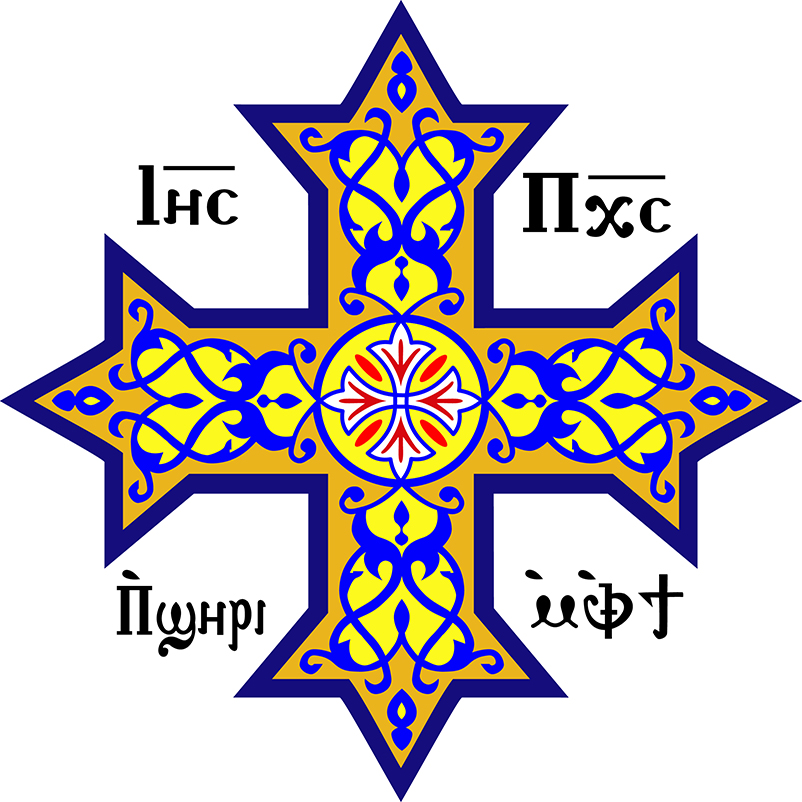
Image opposite: a Coptic Christian cross.
The Coptic letters (Ⲓⲏ̅ⲥ̅ Ⲡⲭ̅ⲥ̅ Ⲡ̀ϣⲏⲣⲓ ⲙ̀ⲪϮ) are abbreviated nomina sacra for «Ⲓⲏⲥⲟⲩⲥ Ⲡⲓⲭ̀ⲣⲓⲥⲧⲟⲥ Ⲡ̀ϣⲏⲣⲓ ⲙ̀Ⲫ̀ⲛⲟⲩϯ» (Iêsous piekhristos Epshêri Emefnouti; Jesus-Christ, Son of God).
This expulsion took place around the year 50, about twenty years after the death of Jesus. «Christus» and «Chrestos» are two different words, one meaning «anointed» (referring to a consecrated person), the other translating to «good» and sometimes serving as a proper noun. Under Claudius, Suetonius mentions the «Jews,» whereas here, he mentions the «Christians» in the book on the life of Nero (54-68):
«[Nero] deliver Christians, a race addicted to a new and wicked superstition, to torture. »
Suetonius, The Life of Nero, XVI, 3
The Letters of Hadrian (117-138)
The first, written around 125 AD, is addressed to the proconsul of Asia:
«Therefore, if the inhabitants of the province can openly support this petition against the Christians, so that the matter may be pleaded before the court, let them use this means alone, and not petitions or mere cries.»
The second letter, dated 133-134, is addressed to the consul Servianus:
«…those who worship Serapis act like Christians, and those who claim to be bishops of Christ are followers of Serapis… Even the patriarch, when he travels to Egypt, is forced by some to worship Serapis and by others to worship Christ… They have only one god, money, whom Christians, Judeans, and all other categories of people worship.»
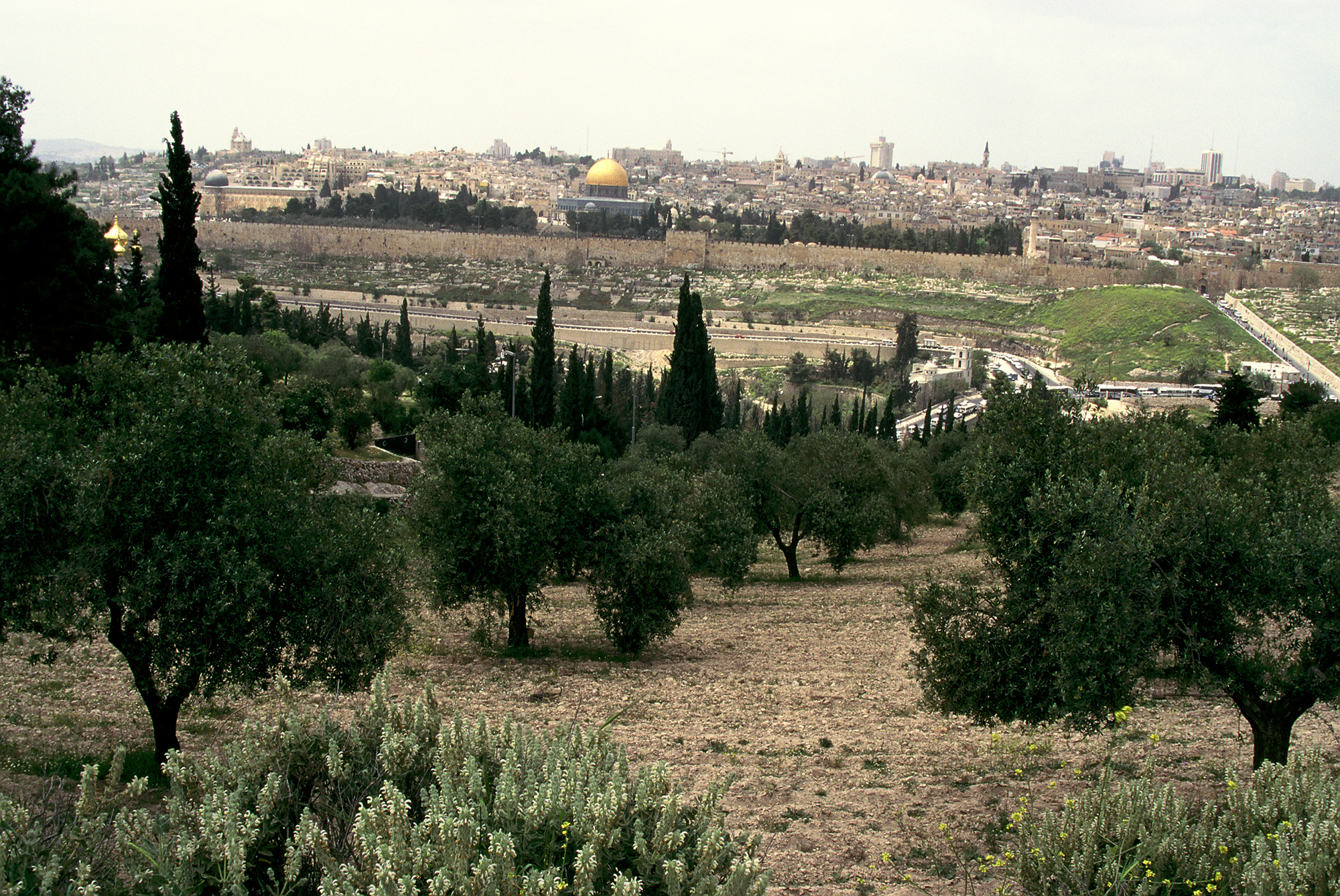
A general view of Jerusalem Mount of Olives. © Patrice Bouton, with his kind permission.
3. Greek Sources
 Phlegon of Tralles
A few years after Josephus, Phlegon, a freedman of Emperor Hadrian (117-138), composed, to satisfy his emperor's curiosity, a work in sixteen books in which he collected marvelous facts that marked world history. Unfortunately, we no longer possess this work, but we know, from citations made by ancient Christian authors or through their allusions, that Phlegon mentioned the earthquake and the darkness that followed the crucifixion of Jesus, which occurred during the reign of Tiberius. Passage cited in the Gospels in Matthew 27:51 and Luke 23:44. (Source: Phlegon, Origen, Against Celsus II.14.33.59)
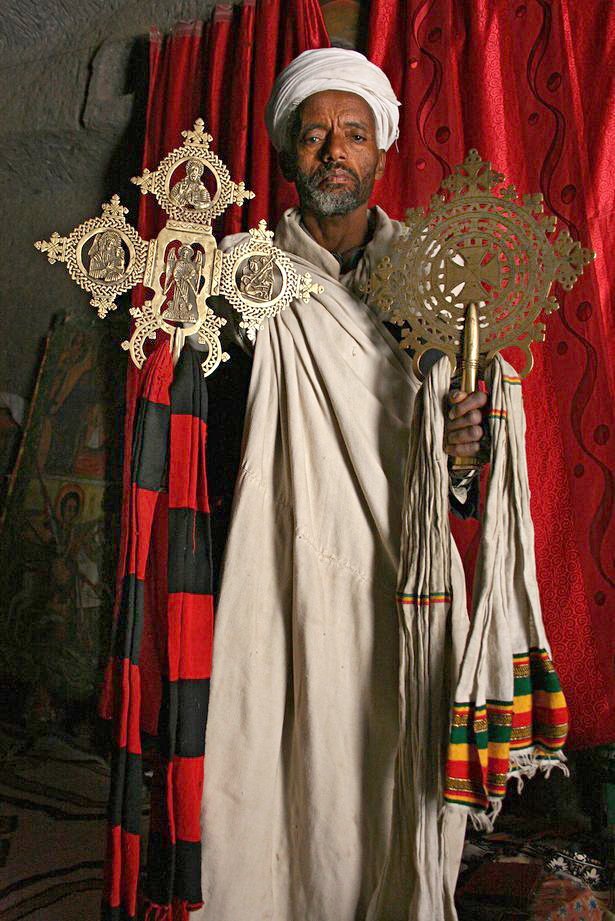
Image opposite: A Coptic Christian priest holding a Coptic cross.
Coptic religion is an ancient form of Christianity, centered on the Coptic Orthodox Church. It dates back to the 1st century when the Apostle Mark is said to have founded the Coptic Church in Egypt, making the Copts descendants of ancient Egyptians and heirs to pharaonic civilization with rites, liturgy, and culture deeply rooted in Egyptian history. Public Domain.
Galen
A little later, a certain Galen (129-201), a famous doctor and friend of Emperor Marcus Aurelius, expressed himself regarding Christians in a text preserved in Arabic. He displayed remarkable tolerance, only regretting the all-encompassing nature of their faith which blindly attached them to the spiritual authority of their founder: In his opinion, Christ, like Moses, was a master worthy of being heard. (Source: Galen, R. Waltzer – Galen on Jews and Christians – 1949, p. 15)
Lucian of Samosata
Recognized as a Greek Christians, but he never disputed their existence:
«You know,» he said, "Christians to this day worship a man, the distinguished figure who introduced their new rites and was crucified for that reason... You see, these misguided creatures have the general conviction that they are immortal forever, which explains their contempt for death and their voluntary devotion, so common among them. Their original legislator convinced them that they are all brothers the moment they convert. They renounce the gods of Greece, worship the crucified sage, and live according to his laws. They accept all this by faith, with the result that they despise all worldly goods, despicable in their eyes.".
Lucian of Samosata, The Death of Peregrinus, 11-13
4. Other sources
Mara bar Serapion (Early 2nd Century)
Mara is known for having been a Syrian Stoic philosopher born in 50 AD. It is known that around 73 AD, he wrote a letter to his son, urging him on the wisdom and tragic fate of the wise, such as Socrates, Pythagoras, and an enigmatic figure referred to as the «Wise King,» who was allegedly unjustly persecuted by his own people. Mara states that the Jews murdered the «Wise King.» Mara adds that God brought desolation and that they were «expelled from their kingdom and driven into all countries». Mara concluded by saying that the «Wise King» and others are not truly dead. Socrates is not dead because Plato was still around, Pythagoras is not dead thanks to the statue of Hera, and the «Wise King» is not dead thanks to «the new laws he enacted.» Everything suggests that Mara was referring to Jesus.
The Quran
The writing of the Quran does not go back beyond the 7th century, but there are echoes of earlier traditions. Passages about Jesus are found there, but under the name of ‘Jesus (Jesus), cited in no fewer than 10 different surahs and his name appears at least 25 times. The passages describe ‘Jesus like a prophet and the son of Mary.
«The angels said, »O Mary! God gives you good news of a Word from Him, whose name is Christ Jesus, son of Mary, held in honor in this world and the Hereafter, and one of those near to God. He will speak to people in infancy and in maturity, and will be among the righteous." She said, "My Lord! How can I have a son when no man has touched me?" He said, "Thus God creates whatever He wills. When He decrees a matter, He merely says to it, 'Be,' and it is. And He will teach him the Scripture and wisdom and the Torah and the Gospel. And [make him] a messenger to the Children of Israel."
Quran 3:35-49.
«We punished them for their disbelief, for their terrible slander against Mary, and for their saying, »We have killed the Messiah, Jesus, son of Mary, God's apostle." They did not kill him, nor did they crucify him; it was made to appear so to them. Those who are in disagreement about it are in doubt, having no certain knowledge, only conjecture. They did not kill him, for certain. God raised him up to Himself. God is almighty, wise.»
(Quran 4:156-158).