


Bible, History, Archaeology
History,
Archaeology
The name of Jehoiachin, king of Judah,
is mentioned on several tablets discovered in Babylon
Contents:
Introduction - Jojakim - Jojakin - The End of the Kingdom of Judah - Jojakin tablet - Jojakin's Tablet 02
 The name of Jehoiachin, king of Judah, appears on four of the 300 cuneiform tablets from the administrative archives of Nebuchadnezzar II (the Nebuchadnezzar of the Bible) discovered between 1899 and 1917 near the Ishtar Gate in the ruins of Babylon by the archaeologist Robert Koldewey and translated by the Assyriologist Ernst Friedrich Weidner.
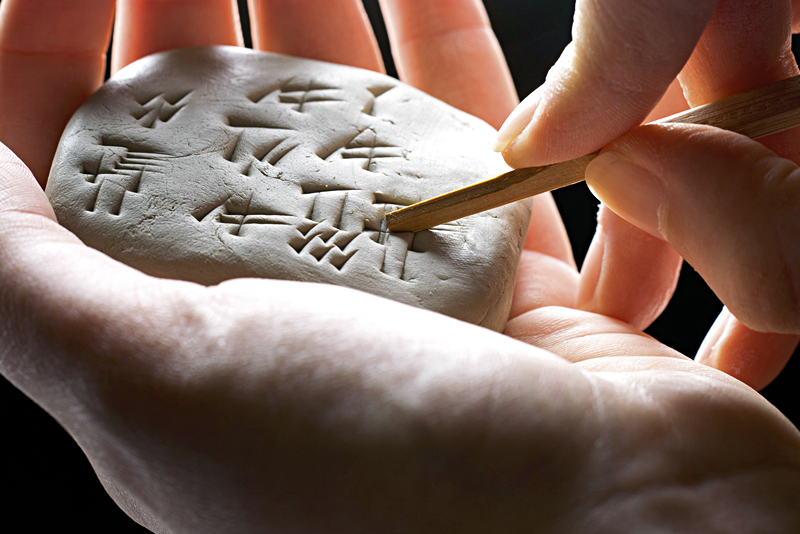
Image opposite: Cuneiform writing takes its name from the «wedge-shaped» strokes impressed by a stylus into soft clay.
From the Latin cuneus meaning «corner». D.R.
Jojakim's son, Jojakim
Jehoiakim (The prophet Jeremiah often names him Jeconiah, Jeremiah 29:2, in Hebrew Jehoiachin (Jehoiachinking of Judah and successor to the throne of his father Jehoiakim (2 Kings 24:8; etc.).
Jehoiakim, 609-598 BCE.
(2 Kings 23.36; etc.).
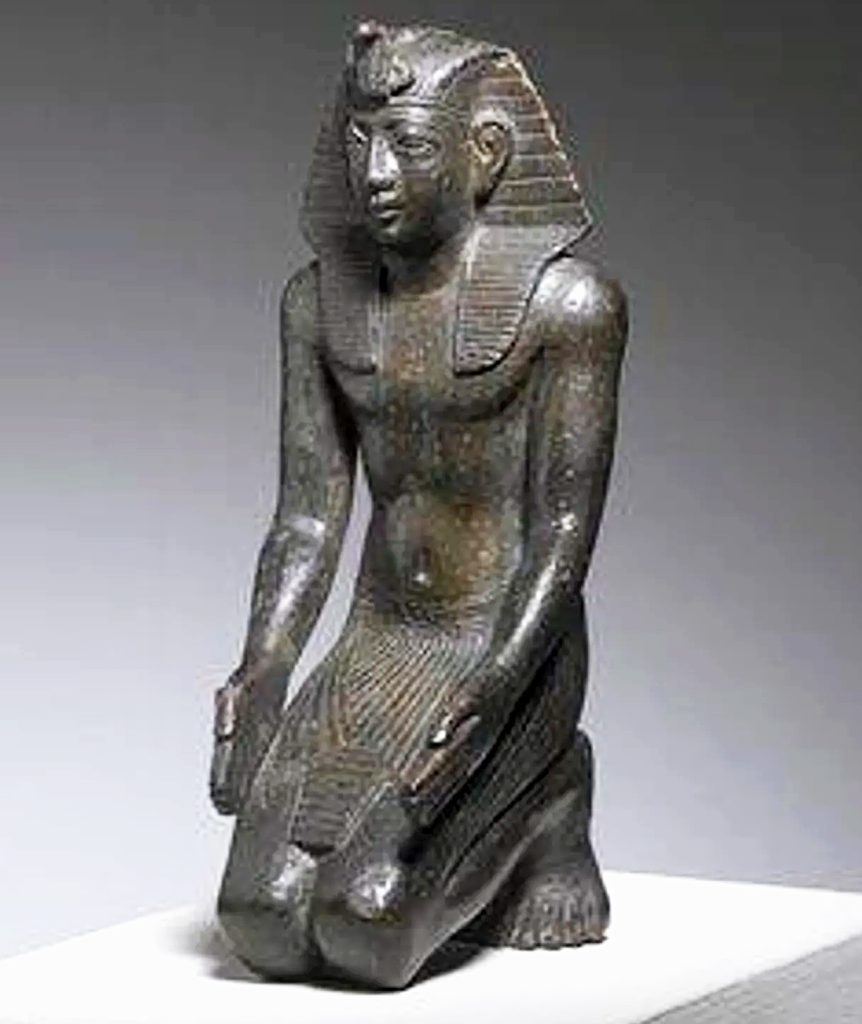 Jehoiakim ascended the throne in 609. He recognized Egypt's sovereignty and imposed a heavy tribute on his people, which he delivered to Pharaoh Neco II, who had placed him on the throne.
Image opposite: Kneeling statuette of King Necho, bronze, 14 cm high, circa 610–595 BC, Brooklyn Museum. Photo credit: DR.
He appears in Scripture as an idolatrous king who despises the warnings of the prophet Jeremiah, whose scroll containing God's judgment he burns, and who warns him of the Babylonian threat (Jeremiah 36). Around 598, he refuses to pay tribute to the Neo-Babylonians, despite Jeremiah's warnings; Nebuchadnezzar seizes him and imprisons him in Babylon (2 Kings 36:6).
This is the first deportation. The prophet Daniel, along with his three friends: Hananiah, Mishael, and Azariah, were among those deported to Babylon to be educated in the wisdom of the Chaldeans and then to serve in the king's palace (Daniel 1,1).
Jeremiah reports that upon the death of Jehoiakim (who was murdered according to Josephus), his corpse was thrown out of Jerusalem, and that he «the burial of a donkey» (Jeremiah 22:19).
Jojakin, 598-597 BC.
(2 Kings 24:8; etc.).
Jojakin was eighteen years old when he ascended the throne, he actually reigned only 3 months and 10 days in Jerusalem;« He does evil in the eyes of the Lord, just as his father did.»
In 598 BCE, Nebuchadnezzar, king of Babylon, marched on Judea and laid siege to Jerusalem. Jehoiakim, king of Judah, then surrendered to the king in a submissive manner, and the king had him imprisoned. The king of Babylon plundered the treasures of the house of the Lord and the treasures of the king's house; he broke all the gold utensils that Solomon had made (2 Kings 24:13); he carried away captive all the leaders of the people along with all the carpenters and locksmiths. Finally, he deported King Jehoiakim, his mother, the king's wives and his eunuchs, and the dignitaries of the land, all seven thousand warriors, all valiant men fit for war, to Babylon.
The end of the Kingdom of Judah in -597
In place of Jehoiachin, the king of Babylon appointed Mattaniah, his uncle, as king, changing his name to Zedekiah. This last proved to be a weak king, manipulated by the officers surrounding him.
He will be the last king of Judah. Jerusalem will be devastated, the Temple completely destroyed, and all its treasures and utensils transported to Babylon.
Excerpt from the biblical text
«In the thirty-seventh year of Yoyakîn's captivity, king of Judah, on the twenty-seventh day of the twelfth month, Evil-Merodac [one of the sons and successor of Nebuchadnezzar], In the first year of his reign, he raised the head of Jehoiachin, king of Judah, and brought him out of prison.
He spoke kindly to him, and he set his throne above the thrones of the kings who were with him in Babylon. He had him change his prison clothes, and Jehoiachin always ate at his table all the days of his life.
The king constantly provided for his daily maintenance throughout his life.» (2 Kings 25:27-30).
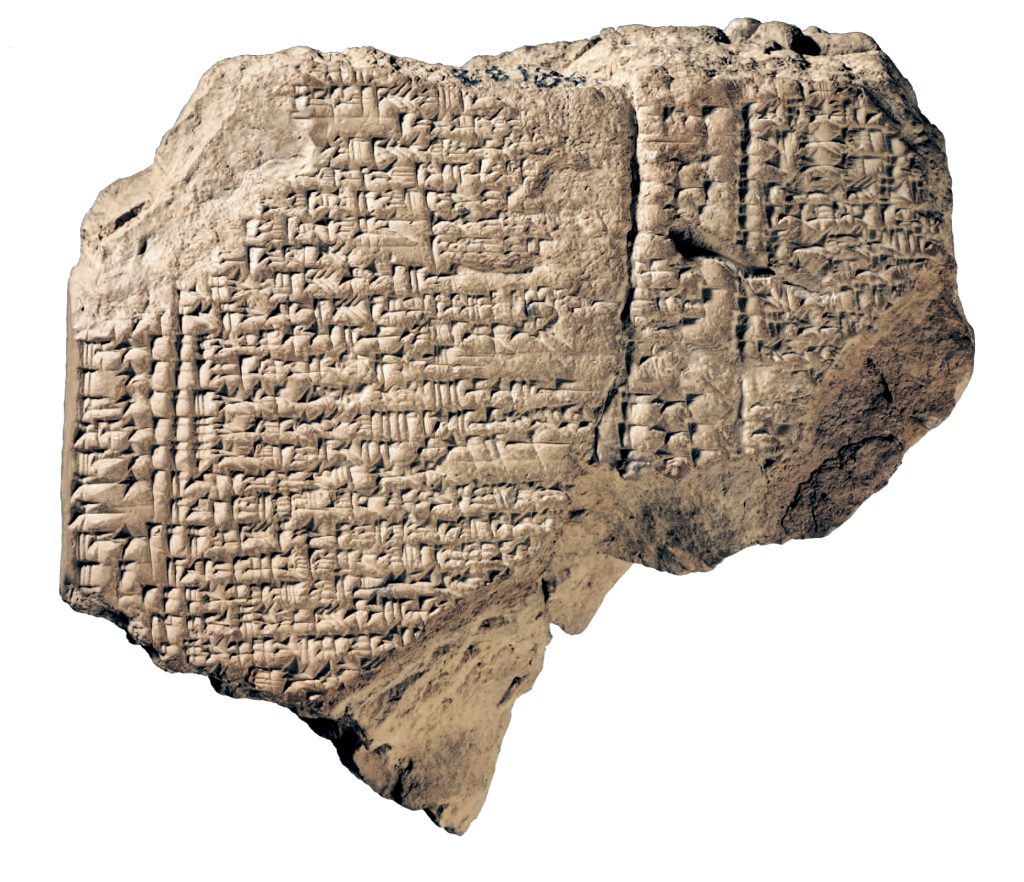 Image opposite: one of the four tablets, out of 300, mentioning Jehoiachin, in Akkadian language and cuneiform script, unearthed in the early 20th century in Babylon.
Neo-Babylonian period, circa 595-570 BCE.
Height: 9.2 cm. Length: 10.5 cm.
On this list are enumerated the quantities of provisions (sesame oil, sometimes barley) that are allocated to Jehoiachin, «king of Judah» (his title is maintained), and his five sons, listed as «royal princes.» 1 Chronicles 3:17-18 lists all the sons of Jehoiachin: Assir and his son Shealtiel (the latter will become the father of Zerubbabel, prince of Judah and future governor of Judea, Matthew 1:12), Malkiram, Pedaiah, Shenazzar, Jeconiah, Hoshamah, and Nedabiah.byes (the spelling of the names comes from the Chouraqui version).
The relatively high quantities of provisions suggest that Jehoiachin was likely responsible for maintaining his household and retinue, implying he enjoyed a certain degree of freedom in Babylon.
Pergamon Museum, Berlin. D.R
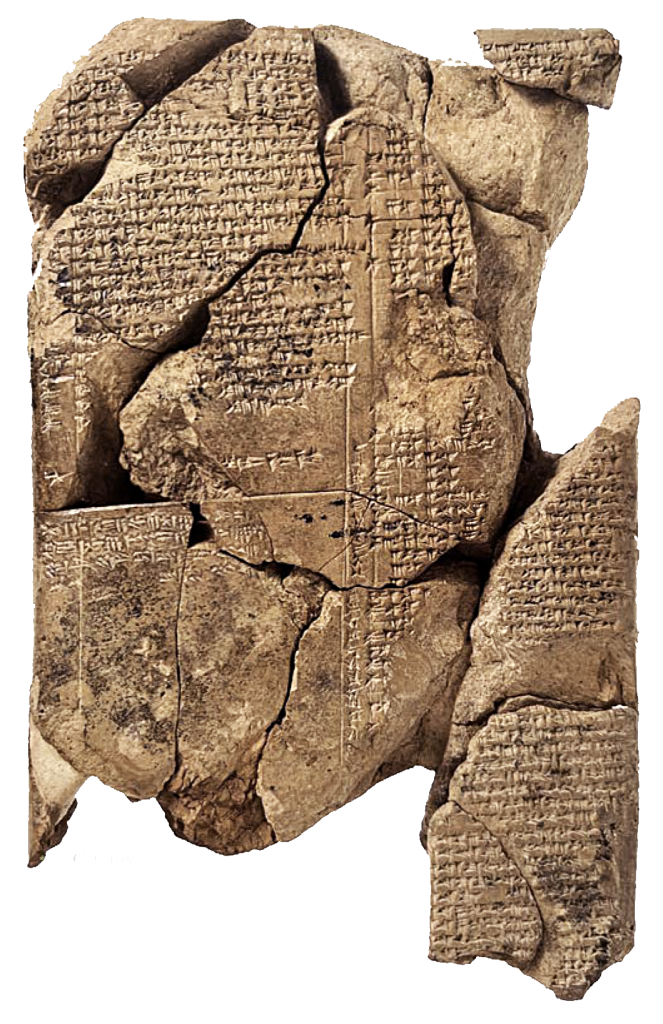 Image opposite: fragmentary tablet listing rations given to prisoners and foreigners, including Jehoiachin of Judah and his family.
Reign of Nebuchadnezzar II, 592 BCE.
Babylon, southern palace. Excavations by R. Koldewey.
Berlin, Museum of the Ancient Near East.
This tablet was presented as part of the “Babylon” exhibition in Paris, at the Louvre Museum, held from March 14 to June 2, 2008. It appears in the exhibition catalog under no. 105, on page 183. Like the other tablet, it mentions the deported king of Judah – Jehoiachin – and is one of the largest clay tablets dating from 595 to 577 BC on which immense quantities of wheat, dates, and sesame oil are accounted for. The transport of these commodities to Babylon, their storage, and their distribution were recorded.
The texts concern the monthly distribution of sesame oil, given to a large number of people, whose names and titles are provided.
Among these beneficiaries are foreigners from Lydia, Caria, Ionia, Pirindu, and Humê in Anatolia; the Phoenician cities of Arwad, Byblos, and Tyre; Judah and Ashkelon in Philistia; Egypt; Media; Persia; and Tilmun. Members of Philistine and Judean royal families—including Jehoiachin, the king of Judah—appear in these lists. .
Most recipients were entitled to half a liter or one liter of oil per month, but some received more: 6 liters, for example, were allocated to Joiakin each month.”