Bible, History, Archaeology
History,
Archaeology
Home > Artifacts > Numismatics >
Discovery of a half-shekel dating from the First Revolt (66-73)
The silver coin, minted by the rebels, was unearthed in a cave near the oasis of En Guedi, during a search for Dead Sea Scrolls.
 The discovery
 The discovery
Archaeologists from the Israel Antiquities Authority (IAA) recently unearthed a rare half-shekel coin dating from 66 or 67 CE, the first year of the Jewish revolt against the Romans. This coin was certainly part of the Jewish underground economy. It seems to have been used to pay the Temple tax and support the parallel economy during the revolt.
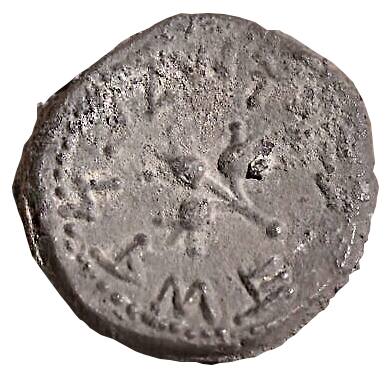
Image opposite: the coin as discovered in a cave near Ein Guedi, with three pomegranates and the words «Jerusalem the holy» in Paleo-Hebrew script. © Emil Aladjem/IAA.
Minting coins
The minting of silver and gold coins was the imperial prerogative, and under his strict control. They featured the emperor's portrait, name and titles. The privilege could be extended to members of his immediate family. So from Augustus to the early years of Nero's reign, finding other coins minted in a precious metal in the Empire was rare and subject to the express authorization of the emperor himself. Even the minting of bronze coins issued by the cities of the Roman East was strictly regulated and presented as a special favor from the Prince.
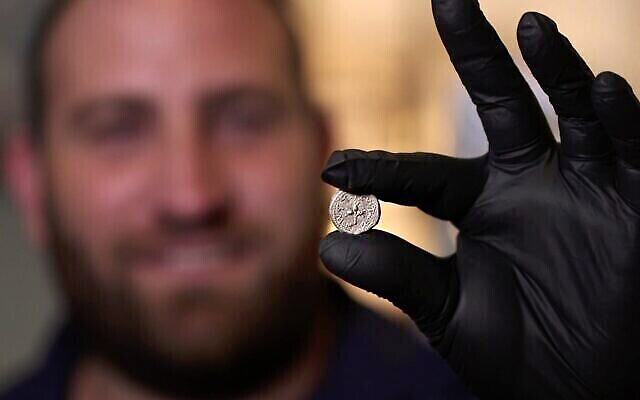
Image opposite: Yaniv David Levy, a numismatic specialist with the Israel Antiquities Authority, displays the coin dating from the first year of the Jewish revolt. Emil Aladjem/IAA.
However, the last years of Nero's reign, particularly from 66 to 68 AD, saw the appearance of coinage not authorized by the central power, a sign among others of profound upheavals.
The silver coin, unearthed in the Ein Guedi oasis region, is engraved with the words «Jerusalem the holy» in ancient Hebrew characters rather than the vernacular Greek of the time, a gesture of defiance in homage to their Jewish identity and the decision to mint the coins independently, explained Yaniv David Levy, numismatist at the IAA.
Before the revolt, the ancient Jews paid the half-shekel tax with silver coins minted in Tyre, Lebanon.
During the revolt, the Jews created their own silver and bronze coins representing shekels, half-shekels and quarter-shekels, on which were inscribed not only the year of the revolt but also political and symbolic elements with evocative messages and signs.
Jerusalem Temple Tax
For centuries, the faithful have made the pilgrimage to Jerusalem and paid the tax called half-shekel tax with silver coins. Indeed, every Jew over the age of 20 was required to pay an annual tax in silver metal equivalent to half a shekel. This tradition may date back to the time of Nehemiah (Nehemiah 10:33-34), and was based on a text of the Law.
The custom of paying a half-shekel tax to the Temple has been preserved to this day by some people, who perform it as a "sacred service". mitzvah, in other words, as a command.
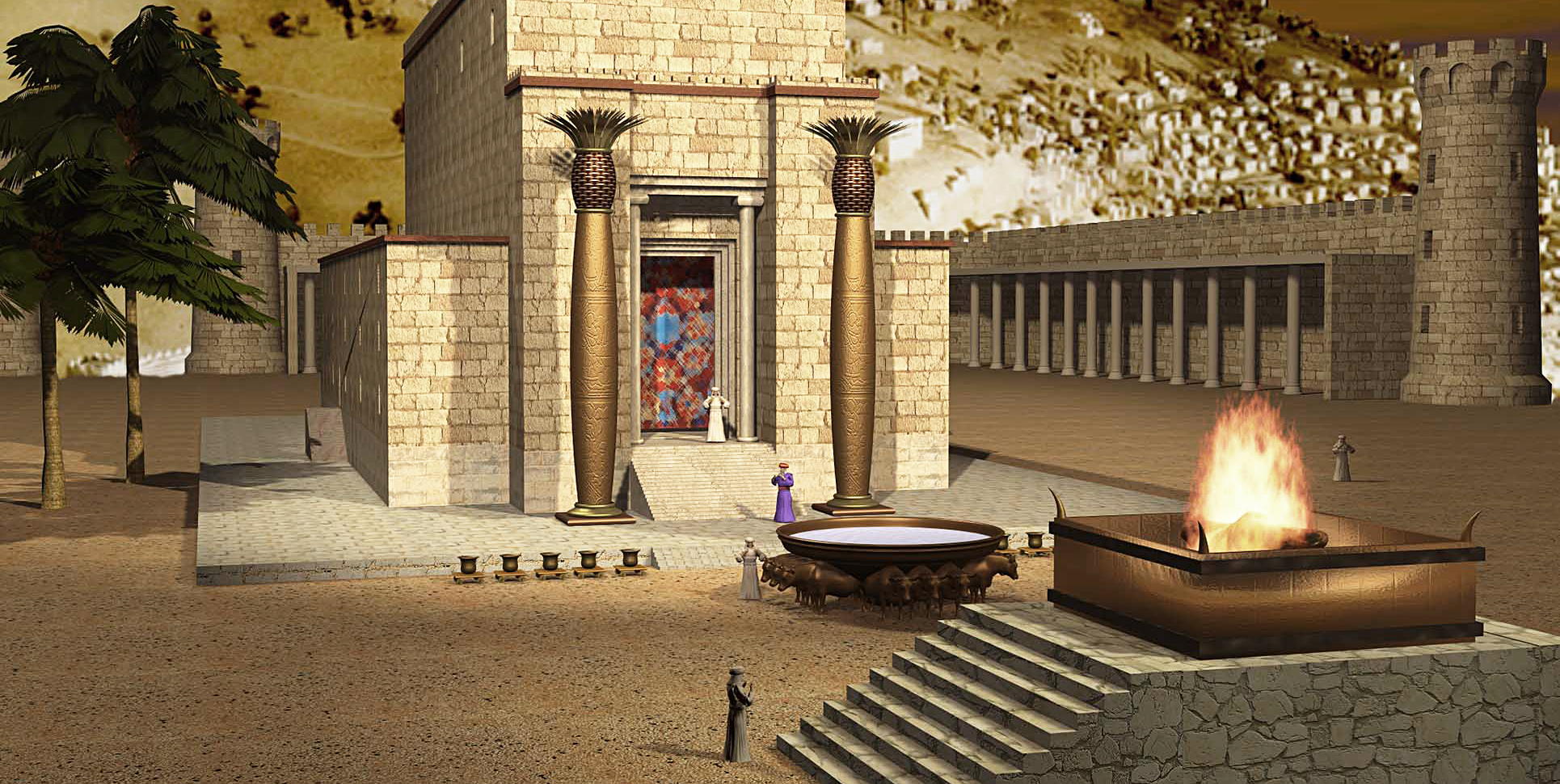
An artistic proposal for a 3d reconstruction of the Temple of Jerusalem in the time of King Solomon. Version with covered vestibule. © Theo Truschel/archeobiblion.
 Obverse and reverse of the coin
 Obverse and reverse of the coin
The coins minted by the rebels feature a rod with three pomegranates on the obverse of the coin and, on the reverse, a cup probably containing the Omer offering - a golden utensil used on the second day of Passover when a measure of barley symbolizing the first-fruits was offered to the Temple. This cup is similar to the one that might have been used by the priests in the Jerusalem Temple. A letter on the reverse indicates the date of issue. The letter aleph corresponds to the first year of the revolt against the Romans.
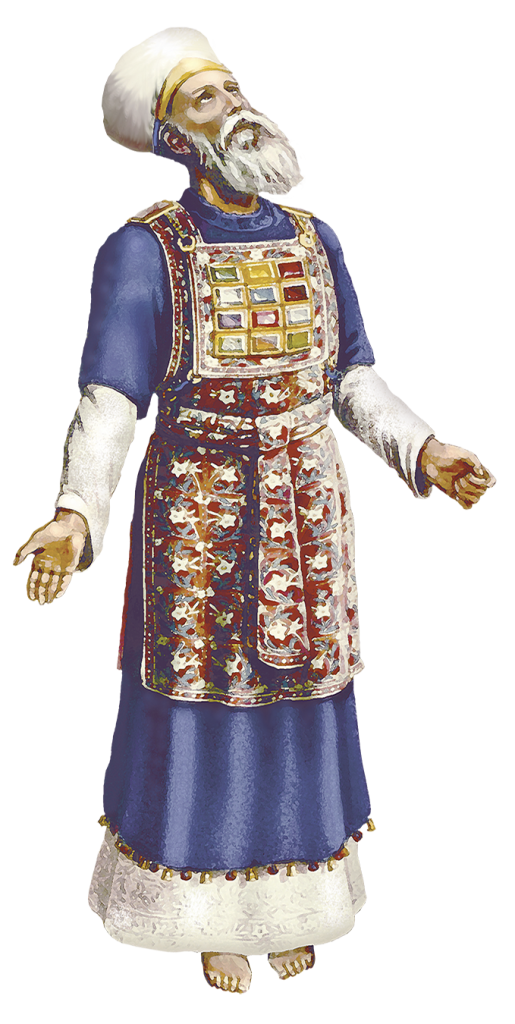
Image opposite: the High Priest in full regalia. The azure, purple and scarlet pomegranates and golden bells are clearly visible at the bottom of his robe. © Théo Truschel/archeobiblion.fr
The pomegranate, saturated with white seeds surrounded by a shimmering red pulp that makes it resemble a precious stone, is a natural symbol of fertility and prosperity. It was one of the seven plant species described in the Torah, objects of blessing for Israel.
In Solomon's Temple, it was already a widespread motif. The Bible describes the ornaments on the high priest's habit as follows At the bottom of the dress, pomegranates of azure, purple and scarlet, with twisted strands, were placed; and bells of pure gold were made, and the bells were intertwined with the pomegranates; a bell, then a pomegranate; a bell, then a pomegranate...«.» Exodus 39:24-26.
Places of discovery
IAA inspectors uncovered the piece during a campaign of intensive exploration of all Israel's caves in the Judean desert. The aim was to find and document archaeological sites before they were looted by thieves. Inspectors have spent the last six years exploring the caves, rappelling down steep cliffs to reach cavities nestled into the mountainside.
 Image opposite: Hagay Hamer, archaeologist with the IAA's Judean Desert Survey, abseils down a cliff to explore a desert cave. © Emil Aladjem/IAA.
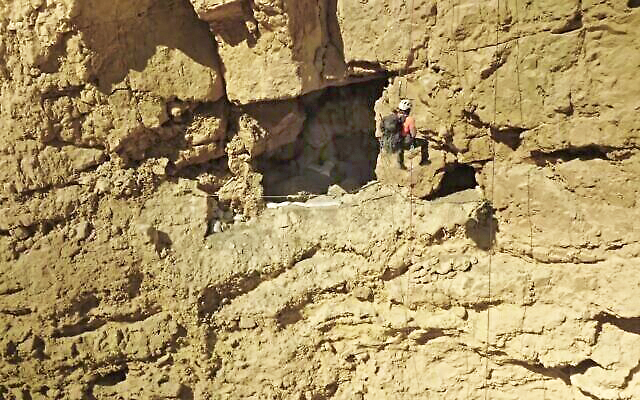 Image opposite: Hagay Hamer, archaeologist with the IAA's Judean Desert Survey, abseils down a cliff to explore a desert cave.
 The survey is a joint initiative of the Israel Antiquities Authority, the Ministry of Cultural Heritage and the Archaeology Unit of the Civil Administration in Judea and Samaria.
«Over the six years of the project, more than 800 caves were surveyed and thousands of important objects discovered, said Amir Ganor, director of the Judean Desert Survey and Excavation Project. «Without this study, the piece could have been recovered by antique looters for resale on the antiques black market at the highest price.»
In the previous year, several half-shekel coins dating from the same period were unearthed in Jerusalem and the West Bank. Notable among these discoveries were those made at the Ophel site in Jerusalem, where the Hebrew University found several bronze coins dating from the latter part of the revolt, in an area where they had already been found.
In the West Bank, archaeologists from Bar-Ilan University uncovered a half-shekel coin, dating from the second year of the revolt against the Romans, at the archaeological site of Khirbat Jib'it, just south of the town of Douma.
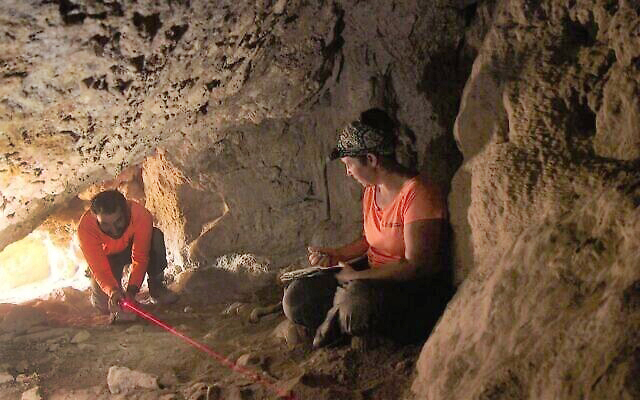
Ouria Amichai and Hagay Hamer, from the IAA's Judean Desert Survey, explore a cave near Ein Guedi. © Emil Aladjem/IAA.
The discovery of the coin in a cave near En Guedi came as Israel was preparing to commemorate Tisha BeAv, a Jewish fast day. This day of mourning, one of the darkest in the Jewish calendar, commemorates, among other things, the destruction of the Temple of Jerusalem by the Romans (73), and the internal dissension and hatred within the Jewish community that contributed to this destruction.
«Finding this piece today reminds us of what happened in the past and teaches us how important it is for us to make efforts to stay united.», said Eli Escusido, Director of the Israel Antiquities Authority.